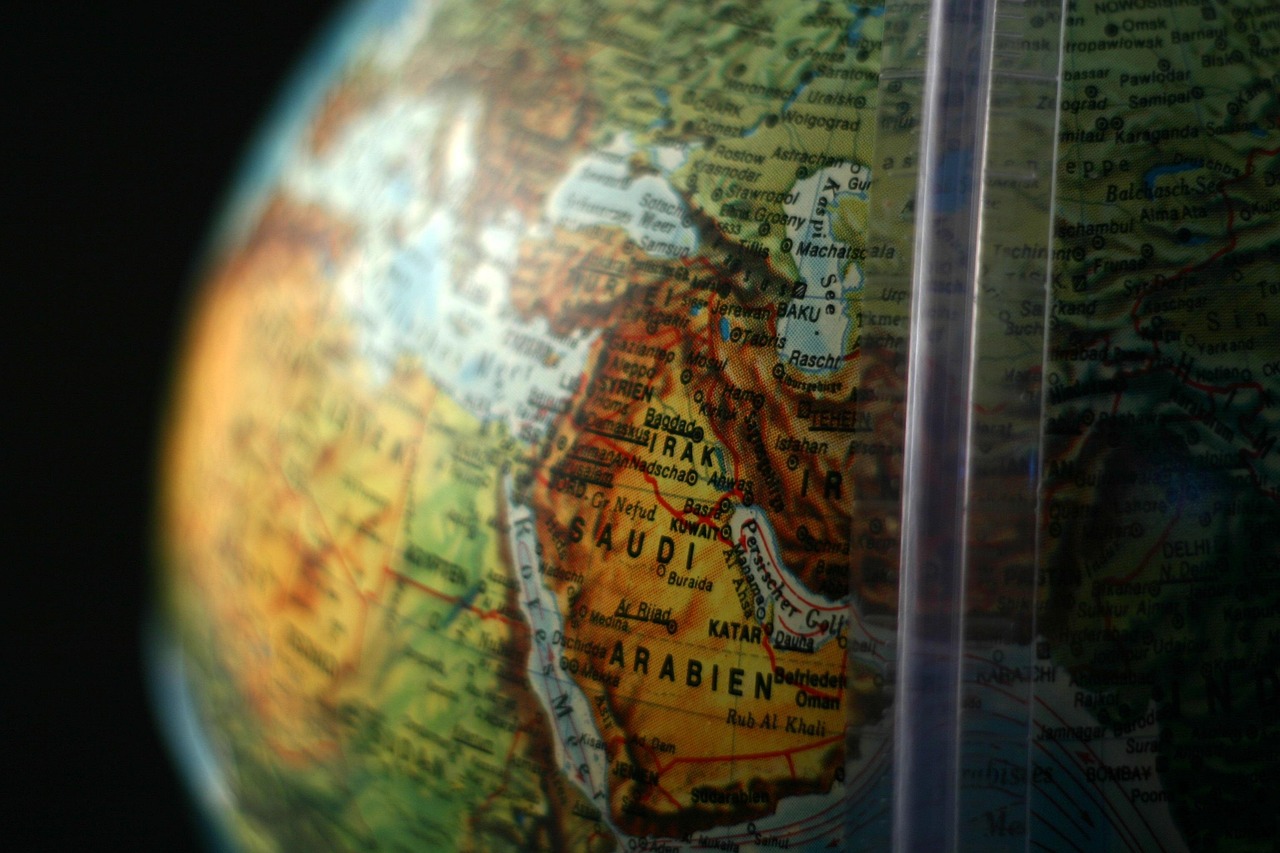
The Middle East Isn’t Waiting Its Turn: Inside a Region Building Its Own Digital Engine
This article started with a conversation.
I was chatting with Prakhar Agarwal, someone who’s been working across the Middle East’s tech scene, and he said something that stuck:
“Honestly, the Middle East is one of the most impressive markets right now. Even with all the global instability, it’s just accelerating.”
That one line sent me down a rabbit hole. I wanted to understand how real the momentum is—beyond the headlines and hype. So I looked at the data, the capital flows, the real use cases, and the long-term strategies.
What I found: the Middle East isn’t just catching up. It’s building a digital economy on its own terms, and it’s doing it faster and more strategically than most people outside the region realize.
E-Commerce: Scaling Fast and Structurally
Saudi Arabia’s e-commerce market is scaling faster than expected. In 2024, it hit $22.9 billion, and projections from IMARC Group now estimate it could reach over $708 billion by 2033. This isn’t just more people shopping online. It’s a sign of deeper digitization—logistics, payments, warehousing, and last-mile delivery.
More interesting is how government-driven infrastructure spending and fintech innovation are supporting this growth. The Saudi Central Bank (SAMA) has been pushing open banking frameworks, while regulatory sandboxes are letting fintechs like STC Pay and Lean Technologies scale without hitting compliance walls.
In the UAE, the market is set to hit $17 billion by 2025, driven by mobile-first users and a strong retail infrastructure. Homegrown platforms like Noon are dominating across multiple verticals, while Cartlow and Namshi are thriving in niche segments. Amazon.ae remains a major player, but it’s adapting to compete with platforms that know the region better.
Cross-border commerce is growing too. Gulf countries are signing bilateral agreements to streamline customs, especially in the UAE-Saudi corridor, which accounts for a significant share of regional online orders.
Egypt is powering much of the backend. MaxAB, for example, has created a B2B grocery supply chain serving over 70,000 retailers. The startup raised substantial capital to expand its network across underserved areas. Trella, Egypt’s freight logistics platform, secured $6 million in debt financing in 2024 to enhance regional freight flows.
Buy Now, Pay Later (BNPL) is another key force. Tamara and Tabby are leading in Saudi and UAE markets respectively. BNPL transactions in the region are expected to reach $5.79 billion by 2025, growing nearly 20% annually. And with increasing interest from regulators, it’s clear BNPL will either integrate into legacy banking or force them to modernize.
Government initiatives like Vision 2030 in Saudi Arabia and the UAE Digital Economy Strategy are doing more than funding startups. They’re building policy and physical infrastructure to support e-commerce at scale. Public-private partnerships are now driving digital ID, e-payment rails, and national address systems.
Artificial Intelligence: From Ambition to Execution
AI is no longer an experiment in this region. In 2024, the Middle East, Turkey, and Africa (META) spent $4.5 billion on AI. By 2028, IDC forecasts that number will rise to $14.6 billion.
Saudi Arabia has committed up to $100 billion through Project Transcendence to position itself as a global AI leader. This includes building local data centers, training programs, and smart applications across sectors—not just importing models from abroad.
A major step was the launch of the King Abdullah Financial District’s AI hub, a cluster of startups, research labs, and state-backed AI projects aimed at turning Riyadh into a data economy nucleus for the Gulf.
The UAE, meanwhile, is all-in. In early 2024, it launched MGX, a tech investment firm backed by Mubadala and G42. Its mandate: manage $100 billion in assets with a deep focus on AI and advanced technology. G42 has already partnered with Nvidia to develop Earth-2, a climate modeling system, and released Jais, a large language model trained specifically for Arabic and Gulf dialects.
AI isn’t limited to labs or PowerPoints. It’s showing up in banking, insurance, transport, and government services. The UAE was also the first country to appoint a minister of AI, and in 2024, it established the AI and Digital Economy Council to oversee full integration across ministries. National-level pilot programs are being run for AI-driven healthcare diagnostics, judicial decision support, and predictive public service allocation.
The challenge is talent. Local universities are growing AI-focused programs, but demand still outpaces supply. The UAE’s Golden Visa program and Saudi’s new Green Card-style initiatives are trying to bring in senior engineers and domain experts to close the gap.
Also worth noting: China is heavily involved behind the scenes, supplying AI compute capacity, consulting, and infrastructure via companies like Huawei Cloud and Inspur. The region is playing multiple partnerships to hedge reliance on any one bloc.
Startups with Substance
This isn’t just about theory. Real companies are delivering real results.
- Seez, based in Dubai, offers AI-powered solutions for car dealerships, from pricing optimization to virtual assistants.
- MaxAB is digitizing the food and grocery supply chain in Egypt, turning fragmented logistics into a scalable digital network.
- Trella is optimizing B2B freight logistics in one of the region’s most complex environments.
- Linguana is using AI to automate high-quality video translation and localization for creators. The company raised $8.5 million in early 2025 to expand globally.
- Tabby, now valued over $1.5 billion, is one of the first fintech unicorns in the Gulf, reshaping consumer credit access.
These aren’t “apps” in the consumer sense. They are building blocks of digital infrastructure, often deeply integrated with state or semi-government ecosystems.
The Takeaway
The Middle East isn’t quietly catching up. It’s actively investing in its own digital architecture. The growth in e-commerce is matched by serious bets in AI, logistics, fintech, and cloud infrastructure.
This momentum isn’t just about big checks from sovereign wealth funds. It’s about execution—from government strategy to private sector scale. Whether it’s AI regulation, open banking, or startup exits, this ecosystem is evolving fast.
Yes, the region still faces challenges in regulation, talent, and cross-border coordination. But the ambition is real. And more importantly, so is the progress.
If the current pace holds, the Middle East won’t just participate in the next era of the global digital economy.
It will shape it.

