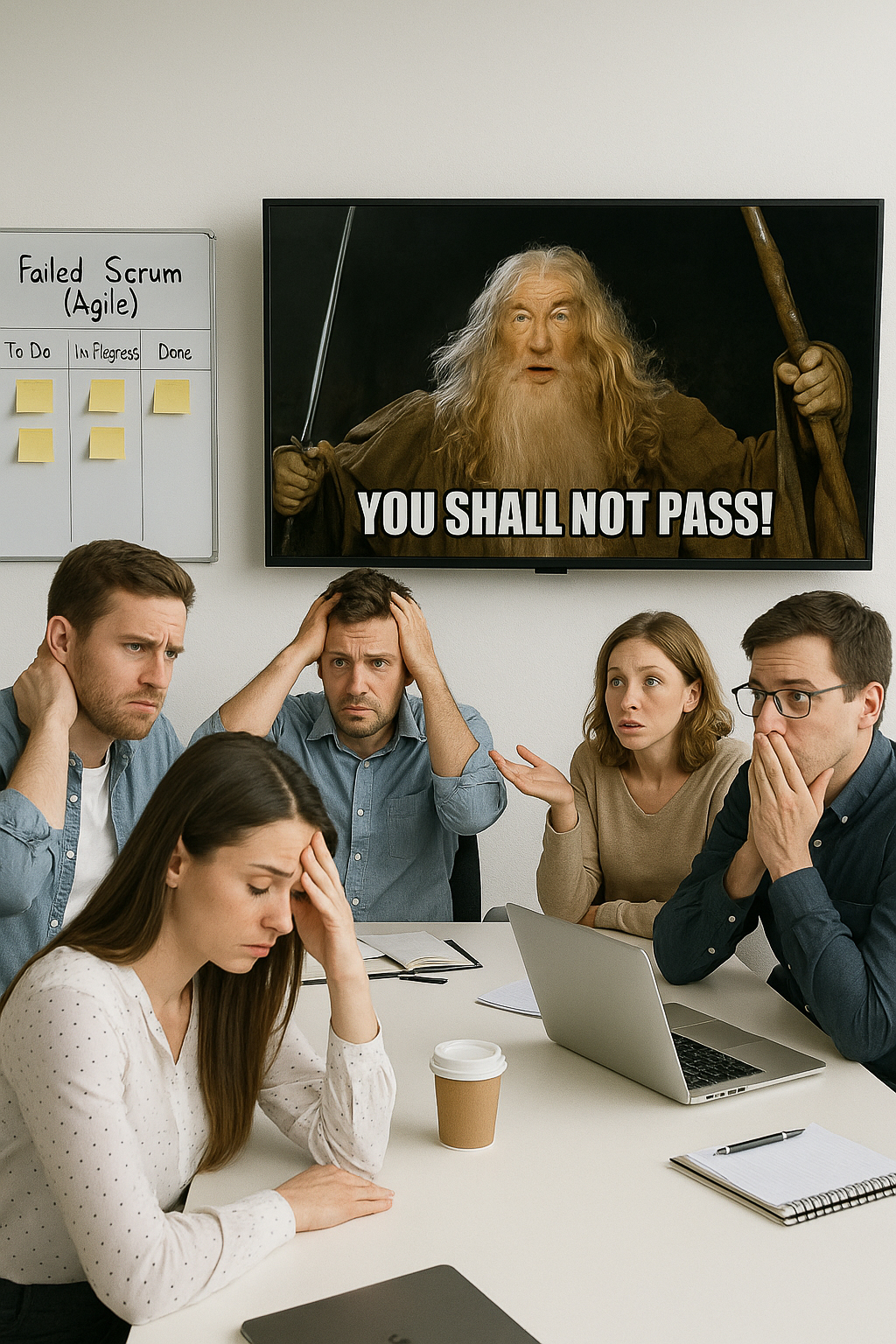
Stop Calling It Agile If You’re Still Gatekeeping Decisions
Everyone throws around the word agile these days. You see it plastered on posters, echoed in daily standups, and proudly printed in job titles. But honestly? A lot of what’s labeled as agile is just old-school command and control wearing a hoodie. If your team has to wait for three approvals to fix a button, you’re not agile. You’re playing dress-up.
The Illusion of Autonomy
One of the biggest traps I’ve seen is this fake sense of empowerment. You tell teams they’re in charge, that they should move fast and break things. But then they need to double-check with their manager before making a single decision.
Seen it way too often.
Teams freeze up, not because they don’t know what to do, but because they’re scared of stepping on the wrong toes. And honestly, who can blame them? If every move they make gets second-guessed, why would they take initiative?
Some teams aren’t even allowed to say no to features. Roadmaps drop from the sky, and they just build what they’re told. That’s not agile. That’s factory-line development with fancier meetings.
You end up with people who follow the process perfectly but never ask why. The whole point of agile is to stay close to the customer and adapt fast. But how can you do that if everything needs a green light from someone else?
Why It Keeps Happening
With all the agile coaches, trainings, and transformation budgets floating around, you’d think we’d be past this. But here’s why it sticks:
1. Leaders scared of letting go
Some folks love the idea of agile… until they realize it means giving up control. It’s hard to go from calling the shots to trusting the team to figure it out. Especially when you’ve been promoted for always having the answers. There’s a sense of identity tied up in being the decision-maker, and it takes humility to move past that.
2. Change only on the surface
Many “agile transformations” stop at the ceremonies. They add standups and retros, but don’t change how decisions are made. Without true ownership, those rituals don’t mean much. You end up doing agile stuff without ever becoming agile in spirit. It’s like putting racing stripes on a minivan and calling it a sports car.
One team I worked with had perfect rituals: standups, retros, demos. But every week, the backlog shifted based on conversations that happened between senior leaders behind closed doors. No one in the squad felt truly responsible. They were just reacting.
3. Hiding control under ‘alignment’
When teams need to check with five committees before making a move, that’s not alignment that’s a slow crawl. True alignment is about shared context, not constant permission. The best teams I’ve worked with were aligned around goals, not methods. They didn’t need handholding every step of the way.
I once saw a PM present a well-prepared initiative she built with her tech lead. The idea was solid, well-timed, and customer-informed. But it got shot down immediately. Why? Because she hadn’t shown it to the Senior Leadership first. Alignment wasn’t about collaboration, it was about authority.
4. Confused roles
Some places still treat product owners and scrum masters like project managers. Instead of enabling, they’re chasing deadlines. The result? Teams that focus on reporting instead of solving real problems. And when roles are unclear, people spend more time managing up than building solutions.
What Real Ownership Feels Like
I’ve worked with teams that actually owned their product, and the energy was completely different. They didn’t wait around. They:
- Shipped often, and safely
- Picked the tools that made sense for them
- Said no when something didn’t add value
- Talked to customers without needing permission
- Caught issues early because they were empowered to speak up
These teams didn’t need to be managed every step. They had context, they had trust, and they delivered.
Were there mistakes? Of course. But they learned fast and got better. No one needed a postmortem PowerPoint to explain common sense fixes.
What really stood out was the confidence. These teams didn’t just follow the roadmap. They questioned it, improved it, and owned it. Leadership was about clearing the path not blocking it.
Agile Isn’t Theater
You can’t keep a tight grip on everything and still expect innovation. You can’t tell people to fail fast and then scold them for failing.
Real agility means stepping back so your team can step up. It means letting them test, learn, and adjust without checking in every five minutes.
If people on the team don’t feel they can push back, question the plan, or suggest better options, then they’re just following instructions. That’s not agile. That’s playing it safe with a nice Kanban board.
People know when they’re being sidelined. If you talk about autonomy but block every meaningful decision, they check out. Or worse they pretend to agree and work around the system. You lose their ideas and their motivation.
Culture eats process. If your culture punishes initiative, no agile framework will fix that. And frankly, some leaders are too focused on metrics and control to see that the real cost is long-term innovation.
How to Make It Better
Start by removing blockers not just process-wise, but mindset-wise. Ask yourself: are we building a team that needs to be managed… or one that can manage itself?
Here are a few ways to actually support agile thinking:
- Let teams shape their own OKRs. Give guidance, but let them own it.
- Treat roadmaps as bets, not contracts.
- Focus on value, not hours or story points.
- Encourage them to say no when something doesn’t fit.
- Build feedback loops into real work, not just retros.
- Stop rewarding heroic firefighting and start rewarding boring, consistent delivery.
Trust grows when leaders stop trying to control everything and start enabling people to thrive. It’s not always easy, especially in larger organizations, but it’s the only way agile really works.
Wrapping It Up
After two decades in tech, I’ve seen agile work beautifully when leaders actually get out of the way. The frameworks are fine. The problem is usually the culture around them.
Agile isn’t a set of meetings or buzzwords. It’s a mindset. And if you’re still gatekeeping every decision, it doesn’t matter how many boards or sprint reviews you’ve got. You’re just pretending.
Want real agility? Trust your team. Let them build. Let them fail and learn. And most importantly, get out of their way.

